
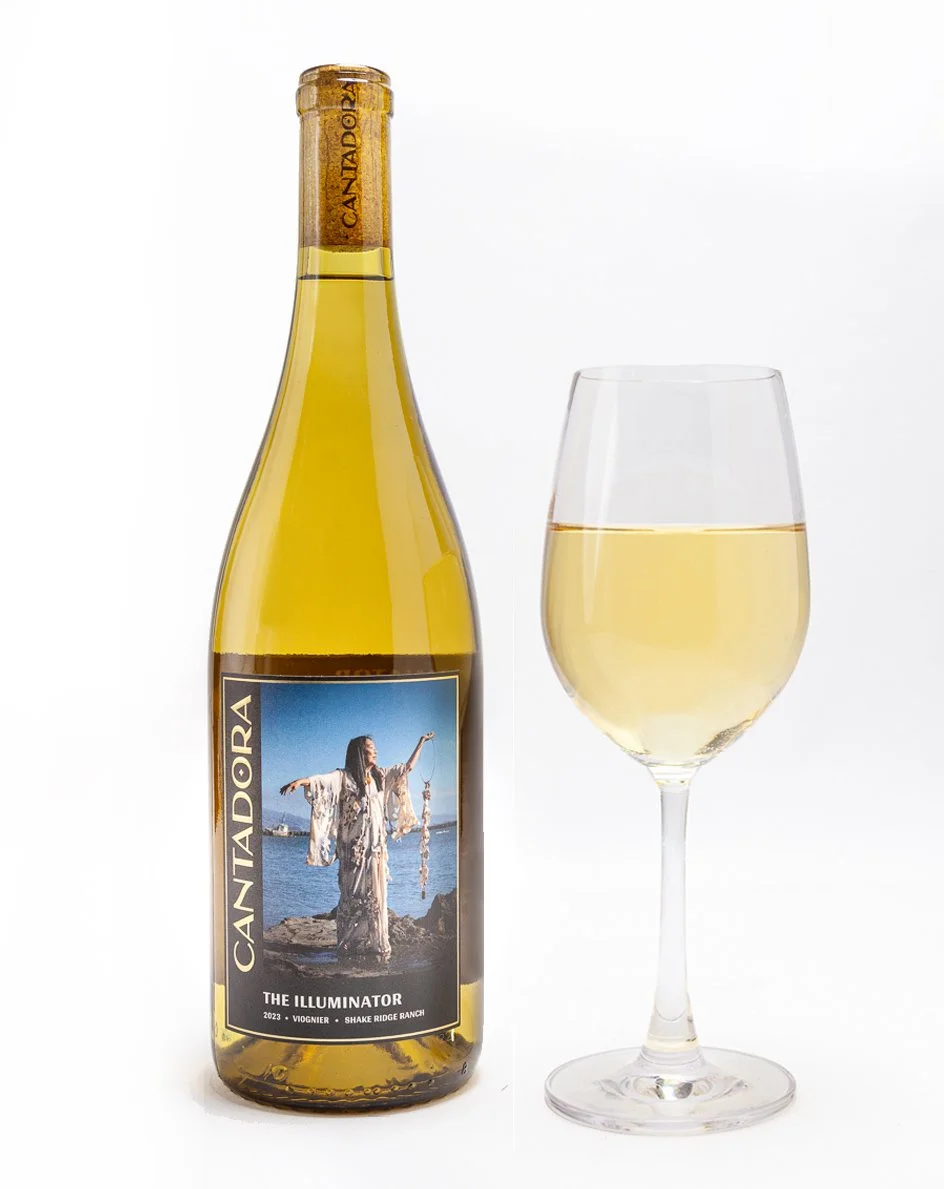
ThE Illuminator

Cantadora “The Illuminator”
2023 Viognier
Shake Ridge Ranch, Amador County AVA
Dedicated to the story and contributions of Na Omi Shintani.
Na Omi Shintani was nominated for the Cantadora label by Nancy Hom. She chose the long-barrel aged Viognier to accompany her image and story. When tasting it we decided it had to be this wine was an excellent accompaniment to oysters.
Oysters loom large in Na Omi’s life as a symbol of her history as well as her advocacy for today. Na Omi has spent much of her life doing something that history often struggles to do: helping people see the human beings behind historical events.
An artist, educator, storyteller, and advocate, Shintani has devoted her creative work to preserving memory, fostering empathy, and illuminating the experiences of children and families who have endured displacement, incarceration, and injustice. Through powerful installations, sculptural works, and community-centered art, she has helped audiences confront difficult chapters of American history—not through statistics or political arguments, but through deeply personal stories that invite connection.
Organically farmed by Ann Kraemer
110 cases produced
Her advocacy has been particularly significant in drawing attention to the detention and incarceration of children throughout U.S. history. By transforming historical research and family memory into accessible and emotionally resonant artwork, she has helped thousands of people understand the human cost of policies that separated families and confined innocent children. It is this commitment to historical truth, public education, and compassionate advocacy that led to her nomination and recognition for her work.
At the heart of Shintani's story is a belief that art can help people remember, understand, and care.
Na Omi Judy Shintani was born in Ames, Iowa, but her family's story stretches across the Pacific Ocean, connecting Hawaii, Washington State, California, and Japan. Her mother was born on Oahu, Hawaii, while her father was born in Shelton, Washington.
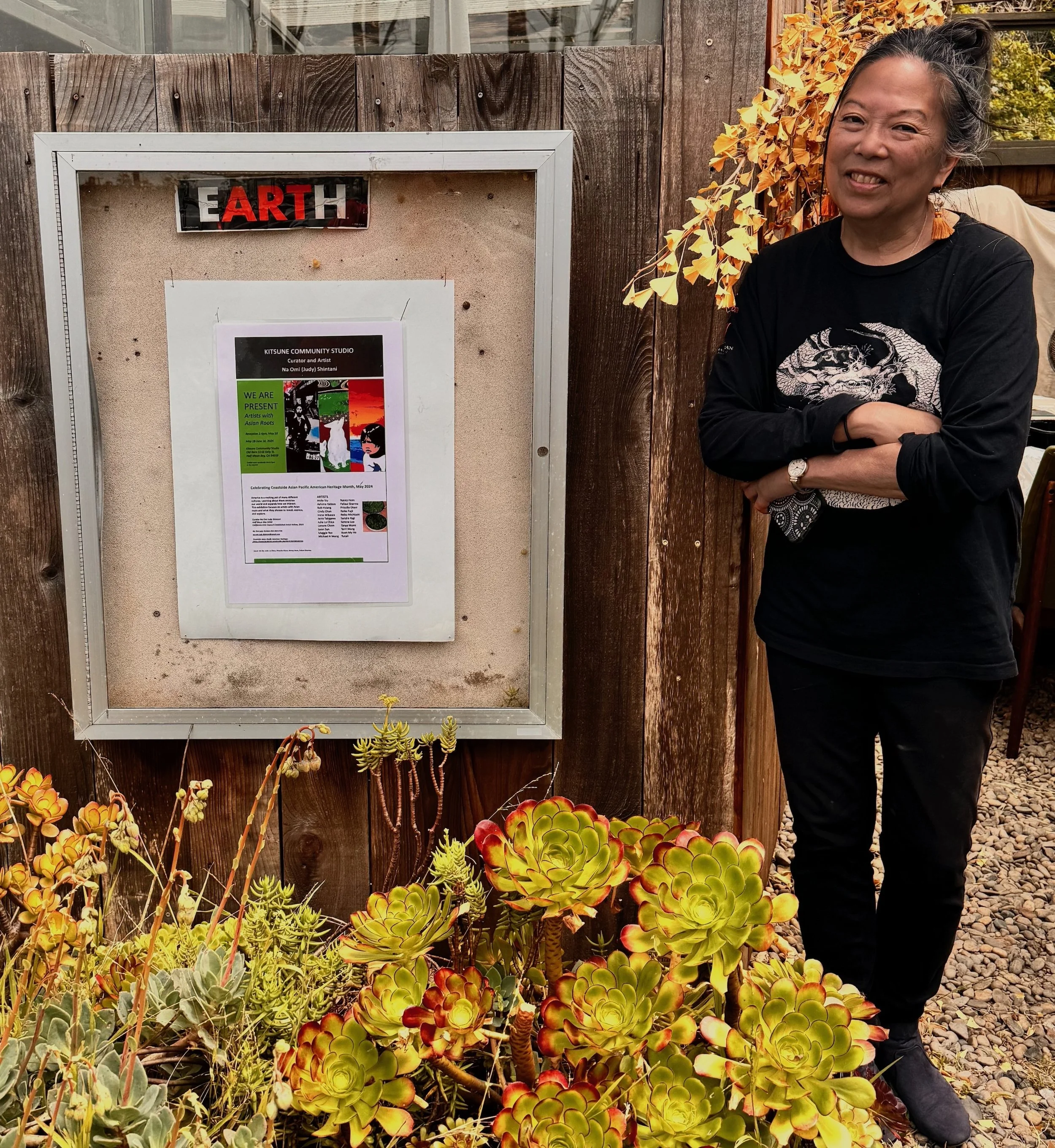
Na Omi outside her art studio “Kitsune” in Half Moon Bay, CA.
Her parents met in an unexpected way. Her mother, an elementary school teacher, traveled from Hawaii to the continental United States during a sabbatical, embarking on a cross-country journey with friends who had never before left the islands. During that trip, she met Shintani's father in New York City. He was studying television broadcasting on the GI Bill during the early years of television technology.
Their romance moved quickly. After only a few weeks together, her father accepted a job in Iowa and proposed marriage. Her mother said yes, and together they began building a life in the American Midwest. Three years later, Na Omi was born.
Yet beneath this hopeful beginning lay a painful family history that would profoundly influence her future work.
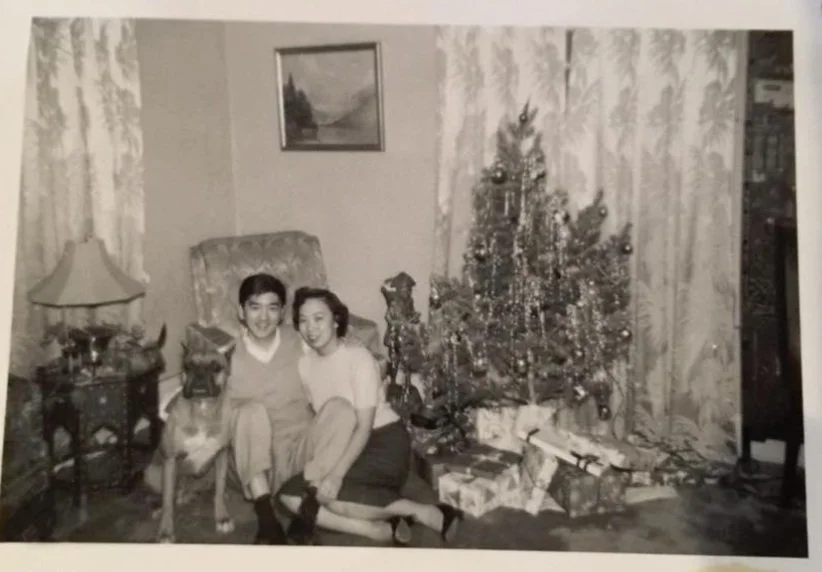
Na Omi’s parents as a newly married couple.
Before he became a television broadcaster, Shintani's father had experienced one of the most troubling civil liberties violations in American history.
Following the attack on Pearl Harbor in December 1941, Japanese Americans on the West Coast faced growing suspicion, discrimination, and government restrictions. Executive Order 9066, signed by President Franklin D. Roosevelt on February 19, 1942, authorized the exclusion of people from designated military areas. Japanese American families were given little time to prepare for removal from their homes and communities.
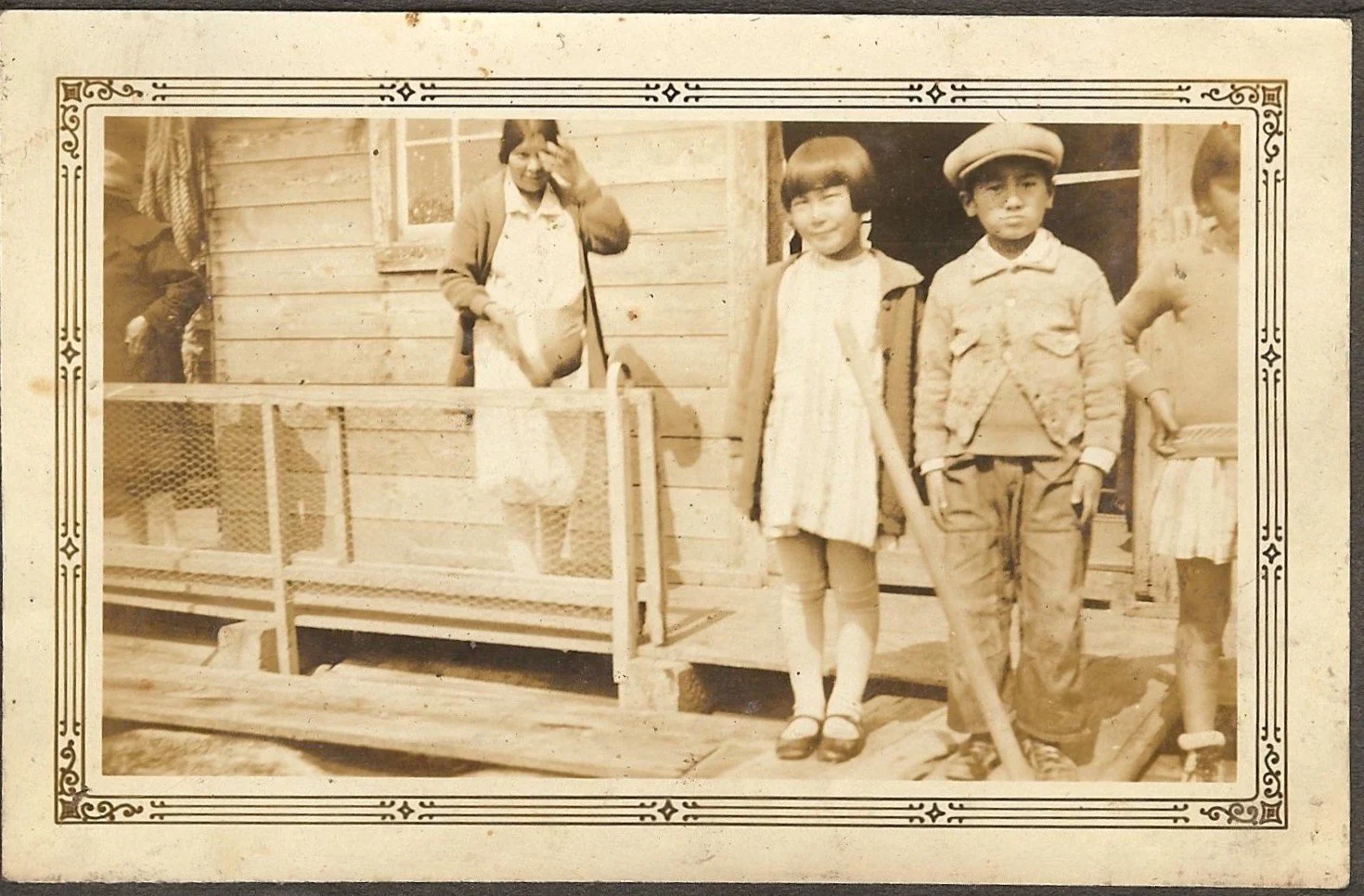
The Shintani family on their house boat in the Pudget Sound.
Their home was a houseboat that her grandfather had built. It was an unusual and independent way of life, closely connected to the water and the surrounding landscape.
The family lived simply. As Shintani recalled, “On their houseboat they had no running water, there's no electricity or anything, and my grandfather built the houseboat.”
Her father and his siblings rowed a boat to school on the mainland. When fog settled over the water, their grandmother found a way to guide them home. “When they came home, if it was really foggy, my grandmother used to hit the pots and pans on the boat so they could hear how to get back.”
It is a vivid image of an intimate family life: children making their way across the water to school, and a grandmother waiting for them, using the sound of pots and pans to help them find their way home.
Her father remembered that childhood fondly. “He always had fond memories of being in that area, and it was really beautiful. I mean, it was the water.”
He was only about thirteen or fourteen years old when the family was forced from that life. The beauty of the place remained with him, but the family would never return to live there.
For Shintani’s grandparents, the consequences of Executive Order 9066 were devastating. Their oyster farm was their livelihood, their home, and the business they had built. The family was uprooted and eventually sent to the Tule Lake incarceration camp in Northern California, near the Oregon border.
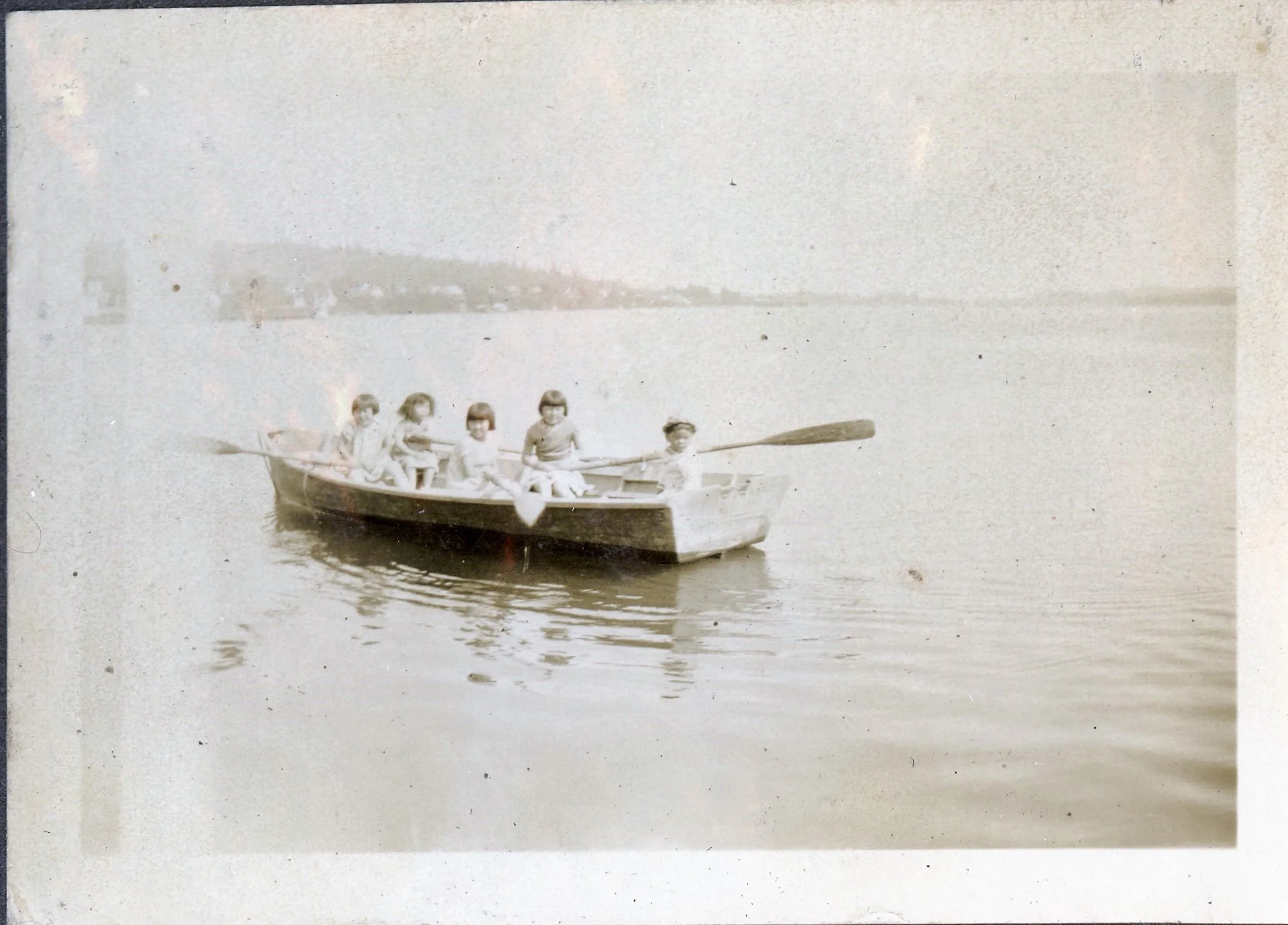
The Shintani children on a row boat in Pudget Sound.
“They got evicted from their property and their livelihood in Washington, where they were raising oysters,” Shintani explained. “So they just got uprooted, and they didn't know where they were going to, and they ended up in Tule Lake.”
Families had to make impossible decisions with almost no time and little information. They did not know where they were going, how long they would be gone, or what would happen to the property they left behind. Some tried to arrange for neighbors or friends to look after their businesses and homes, but many had no such option. Others sold furniture, cars, and possessions for whatever they could get.
As Shintani described it, “They didn't know where they were going or how long they were going to be gone, and a lot of people sold all their furniture and, you know, their cars and their stuff that they could, and got really ridiculous prices for things because they didn't really have a choice.”
Her grandparents faced another painful separation before the family reached Tule Lake. Their oyster farm was near a submarine base, where submarines moved in and out of the channel. Authorities viewed her grandfather’s knowledge of the area with suspicion.
“They were concerned that since my grandfather knew about this that, you know, could be a danger, he could be a spy or such,” she recalled. “But everybody in the whole area knew that those submarines were there.”
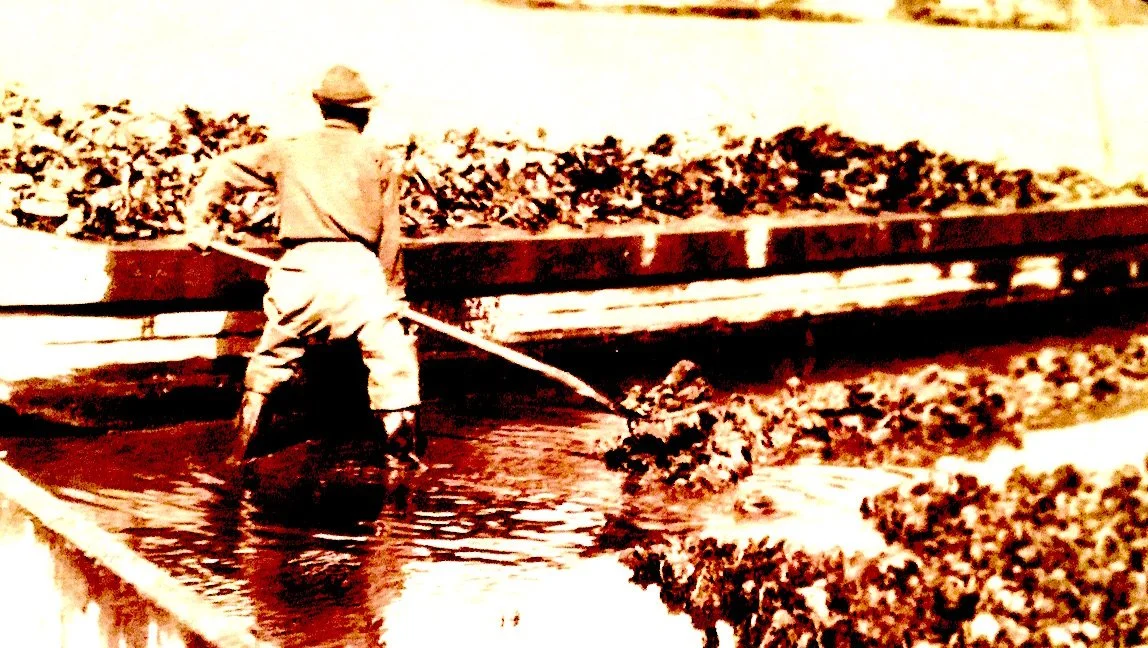
Na Omi’s grandfather farming oysters in Pudget Sound.
Her grandfather was taken first and sent to Missoula, Montana. He was separated from the rest of the family for close to a year before they were reunited at Tule Lake.
That left her grandmother, who spoke no English, to manage the family's departure and care for the children. “My grandmother, who didn't speak any English, she had to kind of deal with a lot of things and getting the kids together and all to leave.”
The family’s experience was not a single, orderly relocation. It was a series of separations, uncertainty, and forced decisions made under extraordinary pressure. The children were uprooted from their home and familiar surroundings. Their parents and grandparents lost the business and independence they had worked to establish.
Shintani’s eldest aunt, who had recently married, went to a different camp, Minidoka in Idaho, with her husband's family. Her grandmother and eldest uncle remained at Tule Lake much longer than other family members—approximately six years, even after the war had ended.
Her uncle was among those known as “No-No” resisters. The term referred to Japanese Americans who answered “no” to questions on a government loyalty questionnaire, including questions about willingness to serve in the U.S. military and whether they would swear unqualified allegiance to the United States. Some people resisted because they objected to being asked to prove loyalty while they and their families were being imprisoned. Shintani recalled that her uncle and others were treated as traitors or suspected spies, and that this contributed to their prolonged confinement.
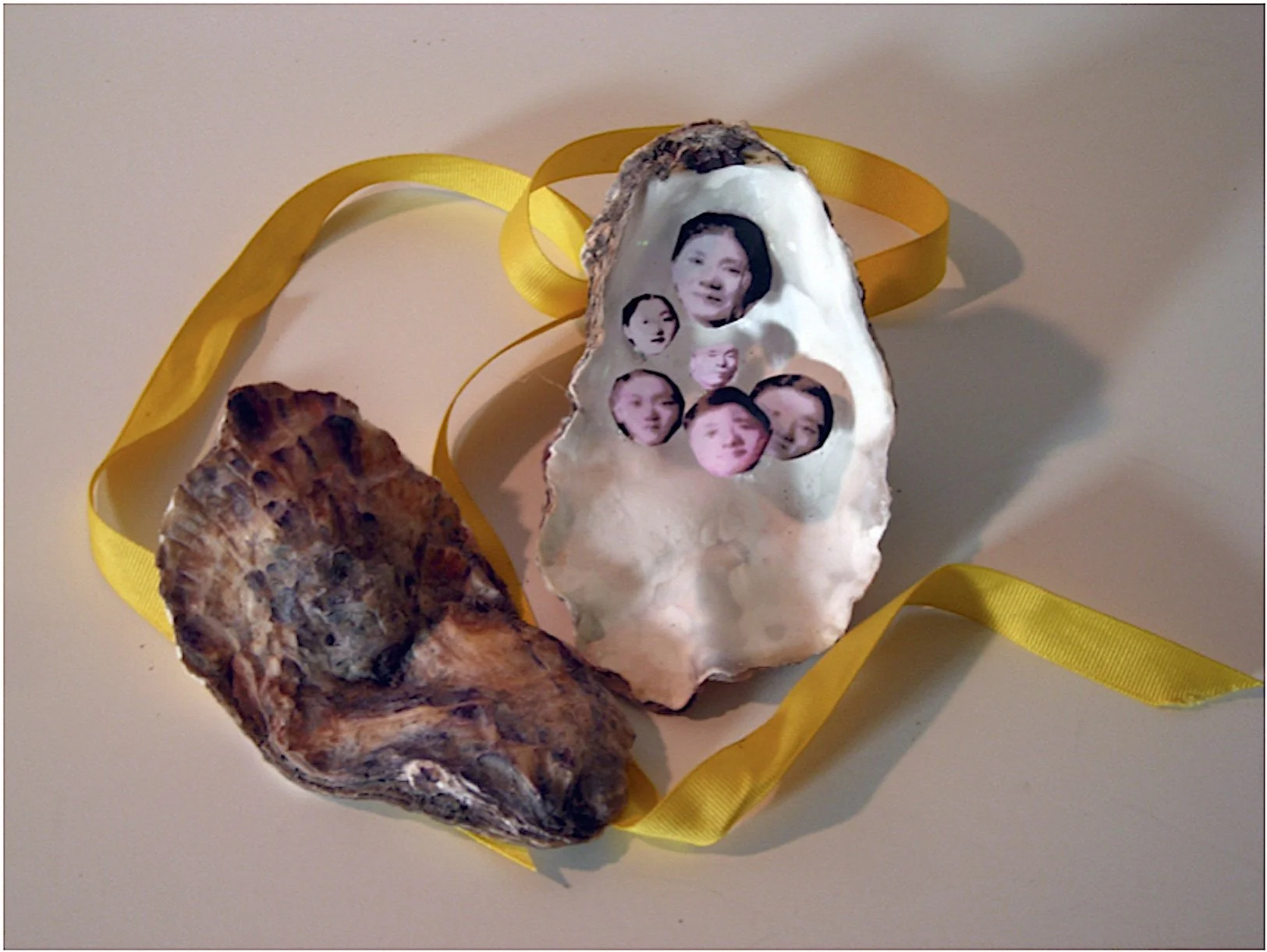
Na Omi’s family as depicted on an oyster shell entitled “Family Jewels”.
The family’s story reveals how incarceration did not end for everyone when the war ended. For some, the uncertainty and separation continued long after the broader public had moved on.
For years, these experiences remained part of her family's history, but like many descendants of incarcerated Japanese Americans, Shintani would later discover that the emotional impact extended across generations.
She remembered her father’s distress as he described the contrast between the life her grandfather had built and the circumstances in which he died. “Your grandfather was very proud. He had his own business, he employed a lot of people, doing oyster farming, and he ends up dying as a farm worker in a dirt floor hut.”
The revelation stayed with her. Her grandfather had been a successful businessman, a provider, and a person with a strong sense of pride. The forced removal had stripped him of his livelihood, his home, and the independence he had earned. His death in a migrant labor camp represented the lasting consequences of a policy that had uprooted an entire community.
For Shintani’s father, the experience also shaped the life he chose afterward. He pursued education and a career outside agriculture, eventually finding work in broadcasting. He and his siblings did not return to Washington to live. The landscape that had meant so much to him remained a place of memory rather than home.
The incarceration of Japanese Americans was often described in historical terms, but what stayed with her were the human stories: parents trying to protect children, families separated from communities, and young people forced to grow up inside barbed-wire enclosures.
Those stories eventually became the foundation of her life's work.
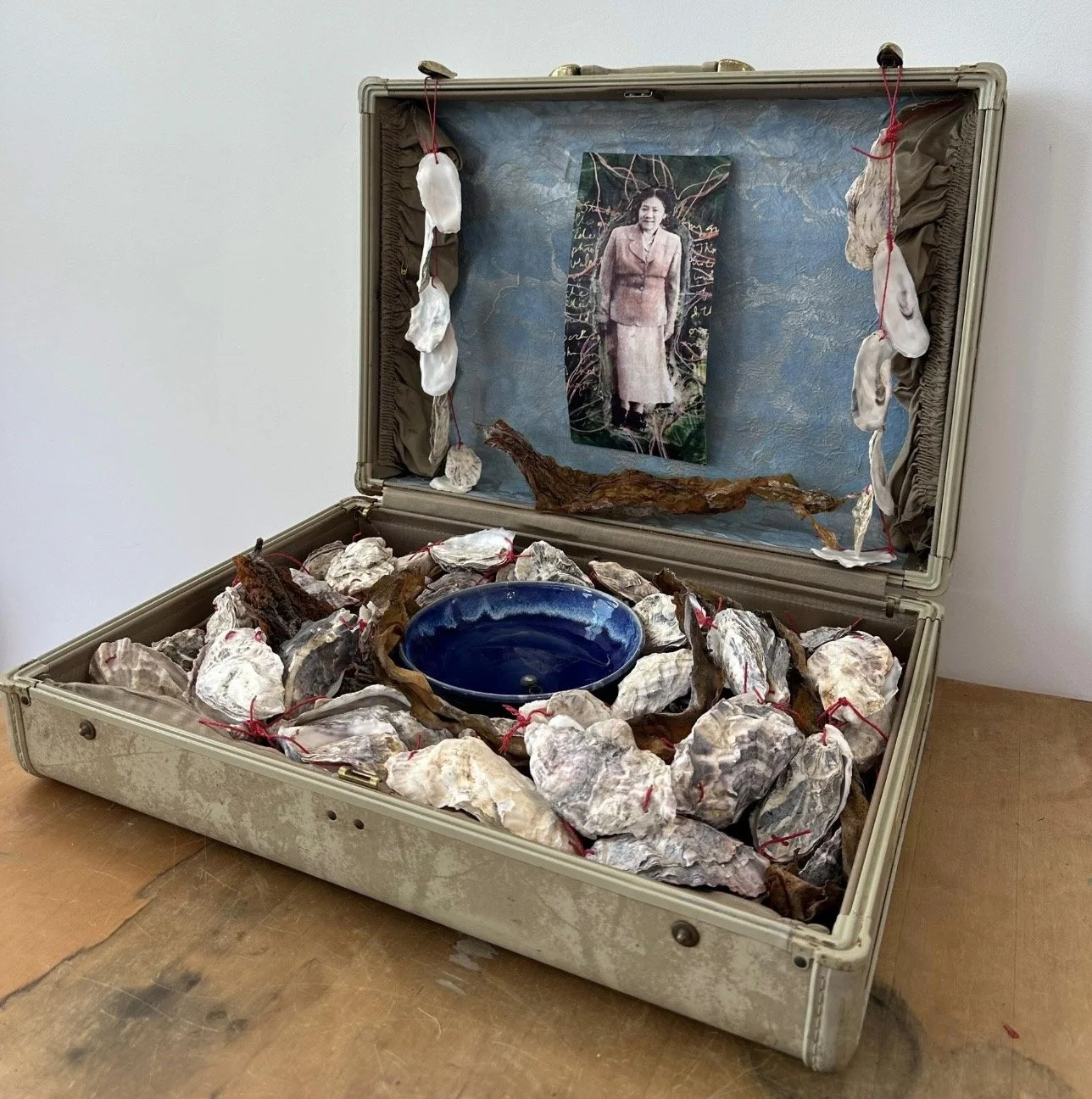
Na Omi’s art piece depicting her grandmother surrounded by oysters.
After her family returned to California, Shintani grew up in Lodi, where she was influenced by both her parents' resilience and their commitment to education and public service. Her mother returned to teaching and became one of the first Asian American elementary school teachers in the region. She eschewed traditional Japanese meals at home in favor of meatballs and spaghetti and other traditional American fare.
Hiding their identity as Japanese and emphasizing their assimilation into American culture became a defining feature of Na Omi’s upbringing. It inspired her collection of deconstructed kimonos, illuminating this loss of identity and culture in their Japanese American community.
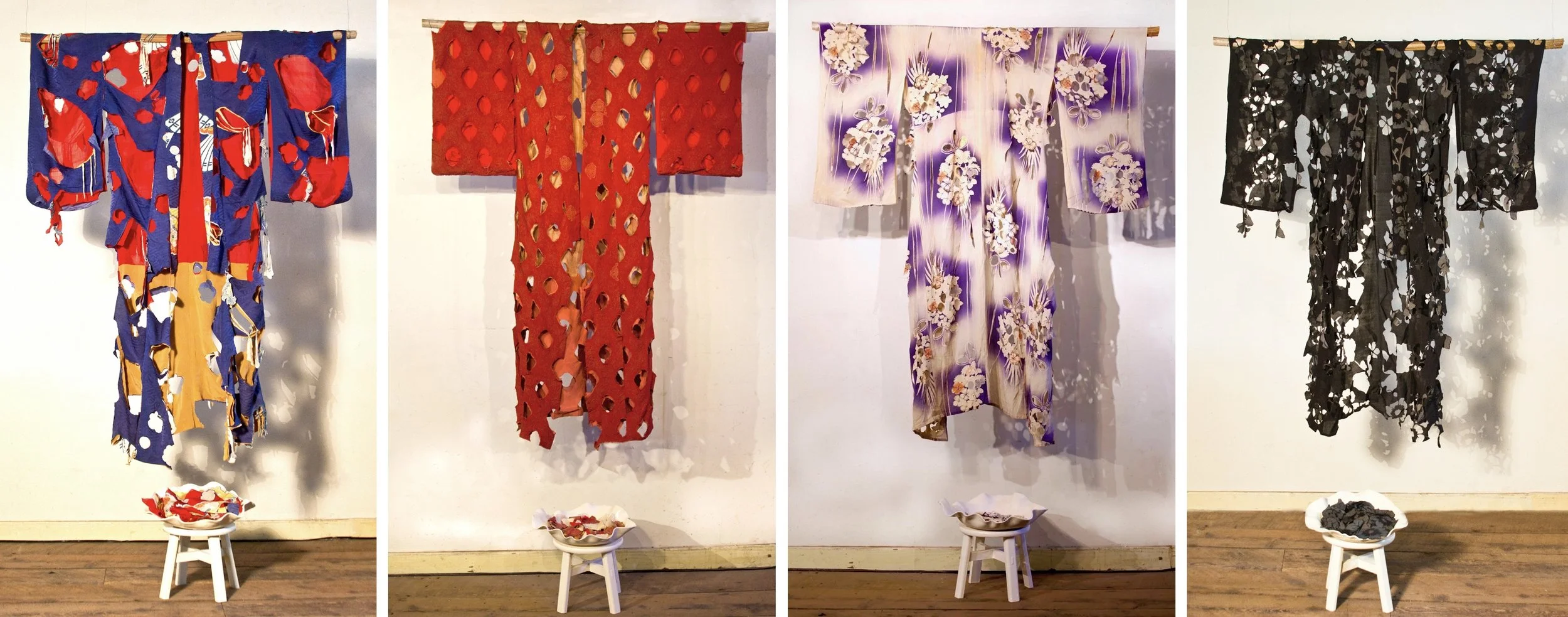
Na Omi’s “Deconstructed Kimono” series on display.
Her mother's experiences also exposed the family to the realities of discrimination. Some parents objected to having an Asian American teacher instruct their children, a reminder that prejudice did not disappear with the end of World War II.
These experiences taught Shintani important lessons about persistence, dignity, and the necessity of speaking up in the face of injustice.
“People don't realize it, but a lot of people in our generation, the third generation, the generation after the camps, they don't speak Japanese because when people are released from camps, they're like - don't speak your language, don't gather with each other.”
She continued, “They wanted their families to be as American as possible, so the assimilation really had an effect on people being able to carry on their culture or their language.”
As she developed as an artist, she became increasingly interested in how visual storytelling could communicate ideas that were difficult to express through words alone. Rather than creating art solely for galleries, she wanted her work to engage communities, provoke conversation, and encourage people to think more deeply about history and human experience.
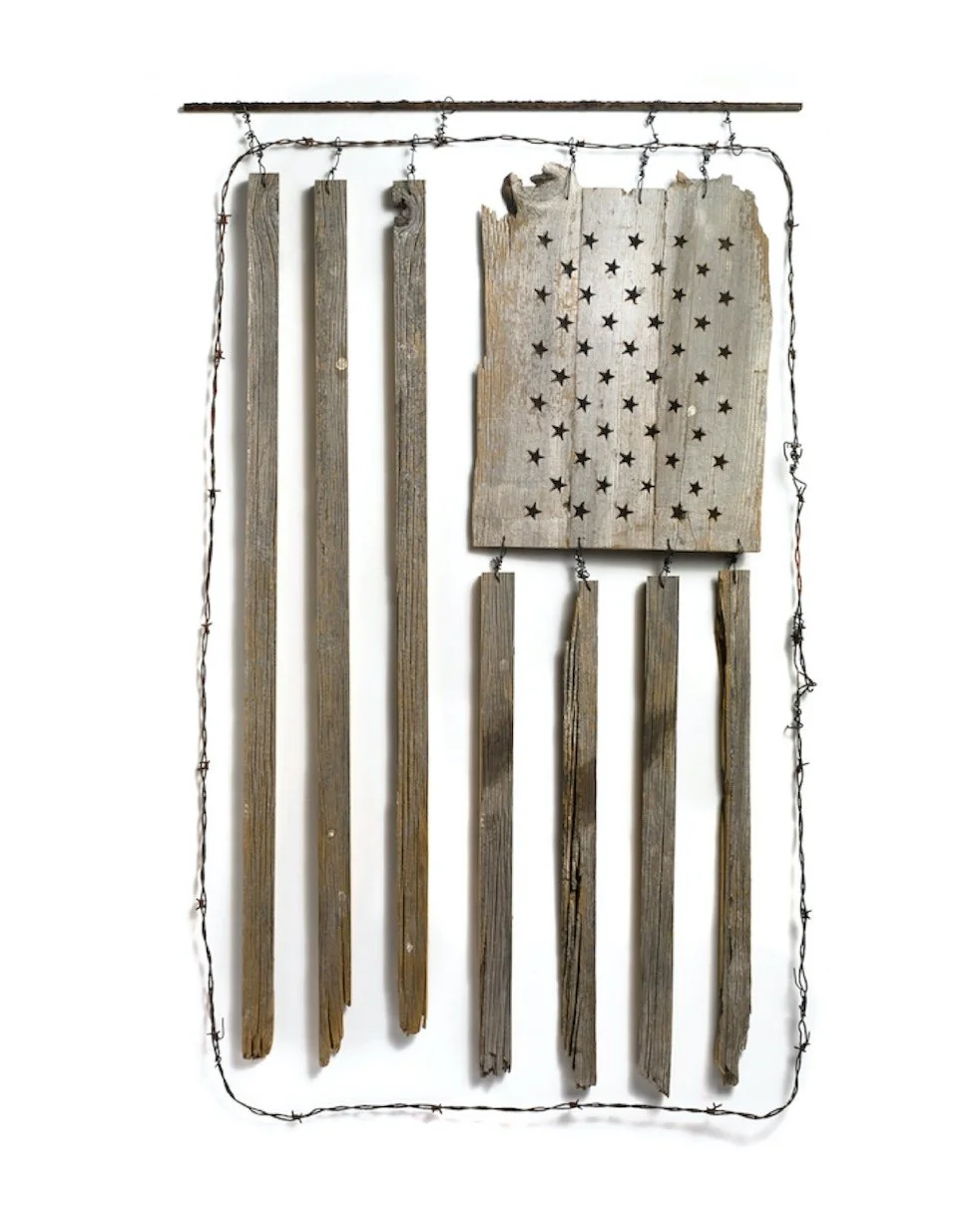
Na Omi’s art piece, a American Flag made of drift wood and barbed wire entitled “Pledge of Allegiance”.
Over time, Shintani's artistic practice evolved from personal exploration into public engagement. She experimented with a variety of themes and mediums, including work inspired by her mother, family stories, and Japanese cultural traditions. She also began developing her well-known deconstructed kimono series and other installations that blended history, memory, and identity.
What distinguished her work was its accessibility.
While many artists addressing difficult subjects choose confrontation, Shintani developed a different approach. She wanted audiences to feel welcomed into the conversation rather than overwhelmed by it.
She explained that her goal was to create art that allowed people to pause, connect, and develop empathy. If viewers immediately turned away from the work because it felt too painful or inaccessible, the opportunity for understanding would be lost.
This philosophy became central to her artistic identity. She sought to create experiences that invited reflection rather than demanded it.
That approach would eventually make her advocacy work especially powerful.
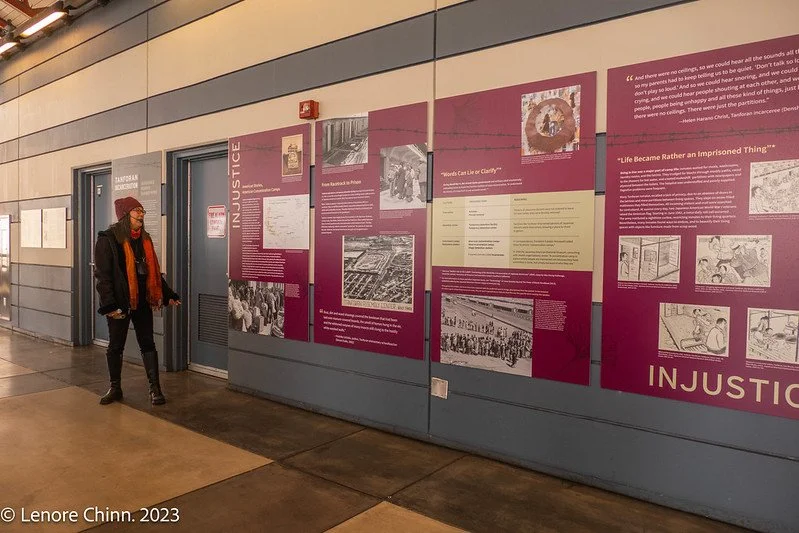
Na Omi speaking at an exhibit that showcases her work and shares the stories of the Japanese Internment.
One of the most significant turning points in Shintani's career emerged from a desire to tell a story that had been overlooked.
While researching Japanese American incarceration, she became increasingly focused on one simple but profound fact: many people did not realize how many of those imprisoned were children.
More than half of the people incarcerated in the camps were minors. Yet public discussions often focused on adults, political decisions, and legal battles rather than on the children who experienced confinement firsthand.
Shintani wanted audiences to understand that these were not merely historical statistics.
They were children.
Children who had done nothing wrong.
Children who lost homes, schools, friends, and freedom.
Children who were treated as potential threats despite their innocence.
The realization inspired one of her most important artistic projects.
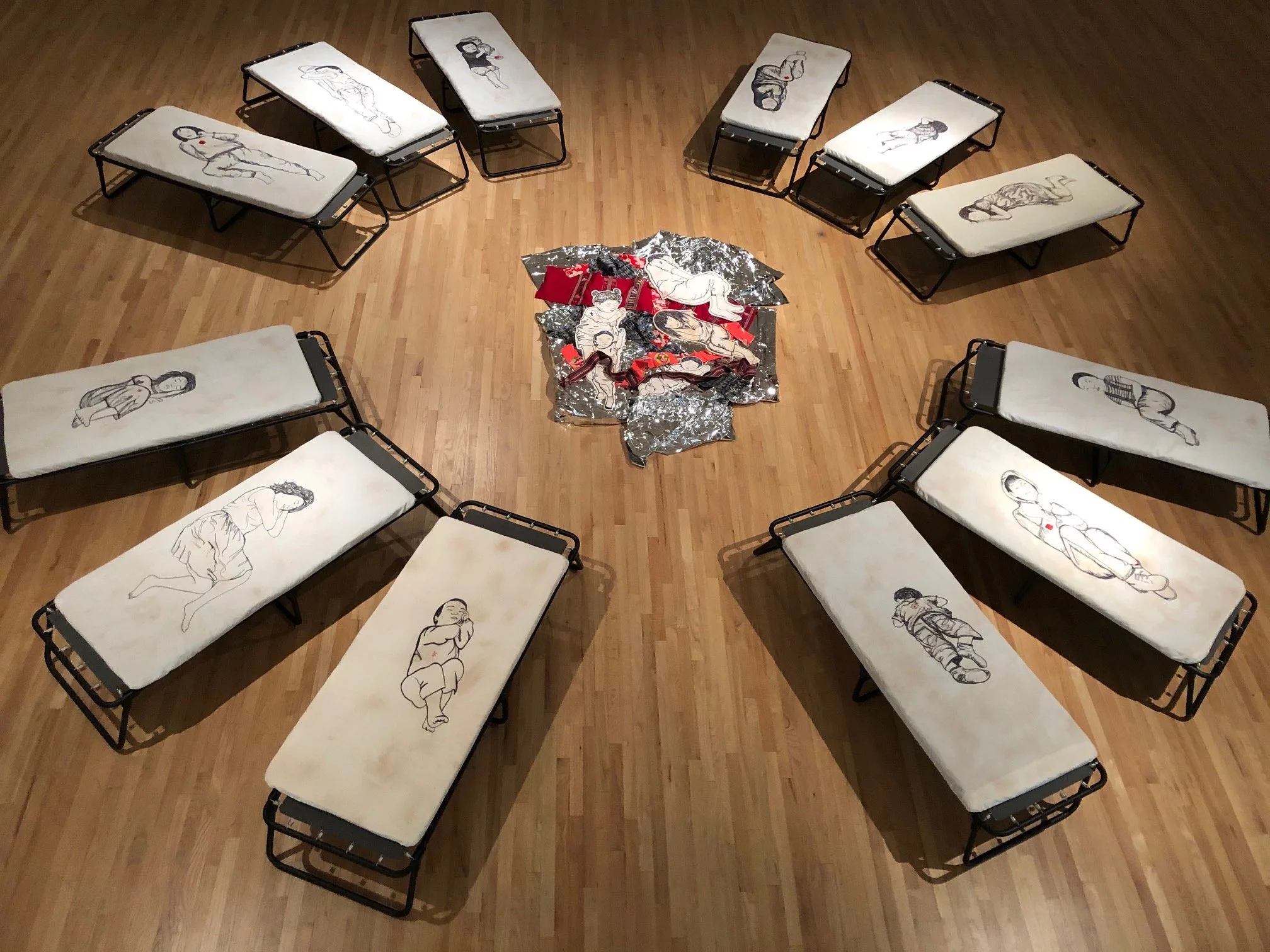
“Dream Refuge” art installation
During a solo exhibition at the Peninsula Museum of Art, Shintani began developing work connected to the Tanforan Assembly Center, a temporary detention site established at a racetrack in San Bruno, California. Japanese American families were confined there before permanent camps were completed. Many lived in converted horse stalls and makeshift quarters.
For the exhibition, she created an installation centered on a child represented on a cot, drawing attention to the children who had lived in those conditions. Later, after discussions with museum curators, she expanded the concept into a much larger installation featuring multiple children.
The work transformed historical records into a deeply human experience.
Rather than presenting incarceration through documents or timelines, Shintani invited viewers to encounter the presence of children whose stories had often been forgotten.
Parents walked through the installation with their own children and began imagining what it would have felt like if their sons or daughters had been forced into those circumstances. Many experienced an immediate emotional connection.
That response was exactly what Shintani hoped to achieve.
As her work evolved, Shintani began drawing connections between Japanese American incarceration and other examples of child detention and family separation throughout American history.
Her installations encouraged viewers to recognize recurring patterns: the targeting of vulnerable populations, the separation of families, and the ways fear and prejudice can influence public policy.
She reflected on how children have repeatedly suffered during periods of social and political upheaval. Her work expanded beyond Japanese American history to include concern for Native American children removed from their families and placed in boarding schools, as well as contemporary immigrant children held in detention facilities.
These connections were never intended as simple comparisons. Instead, they invited audiences to ask larger questions about empathy, responsibility, and what society owes its most vulnerable members.
For Shintani, history was not a collection of isolated events.
It was a living conversation.
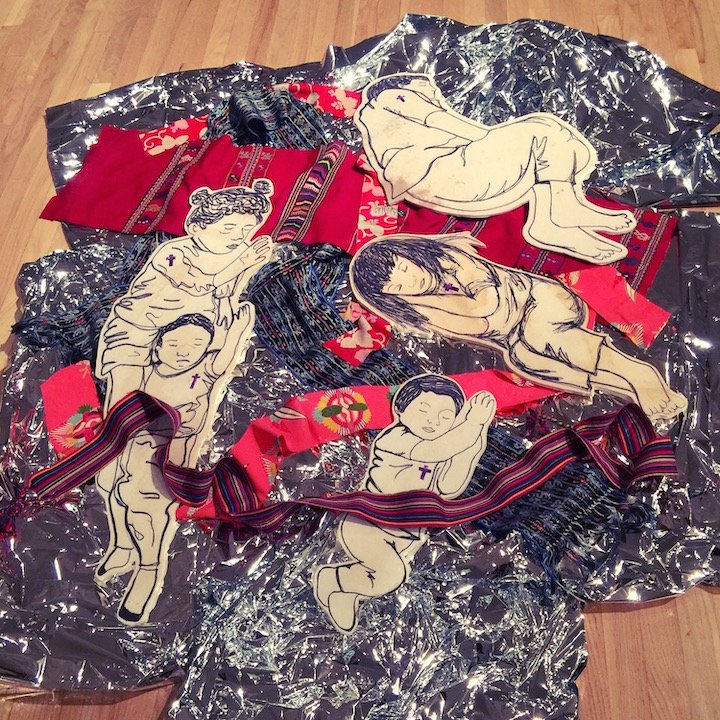
Children in the center of the “Dream Refuge” installations represent the children held at modern day detention facilities as they sleep on the floor with emergency blankets and full light, not on cots.
Shintani's commitment to these issues extended beyond her artwork.
She participated in public demonstrations and community efforts opposing the creation of new detention facilities and remained active in organizations advocating for immigrant rights and social justice.
Her activism was rooted in memory. She understood that the incarceration of Japanese Americans was not merely a historical episode but a warning about what can happen when fear overrides civil liberties and compassion.
Because her own family had lived through that experience, she felt a responsibility to help others recognize similar dangers when they emerged.
Her art became both witness and warning.
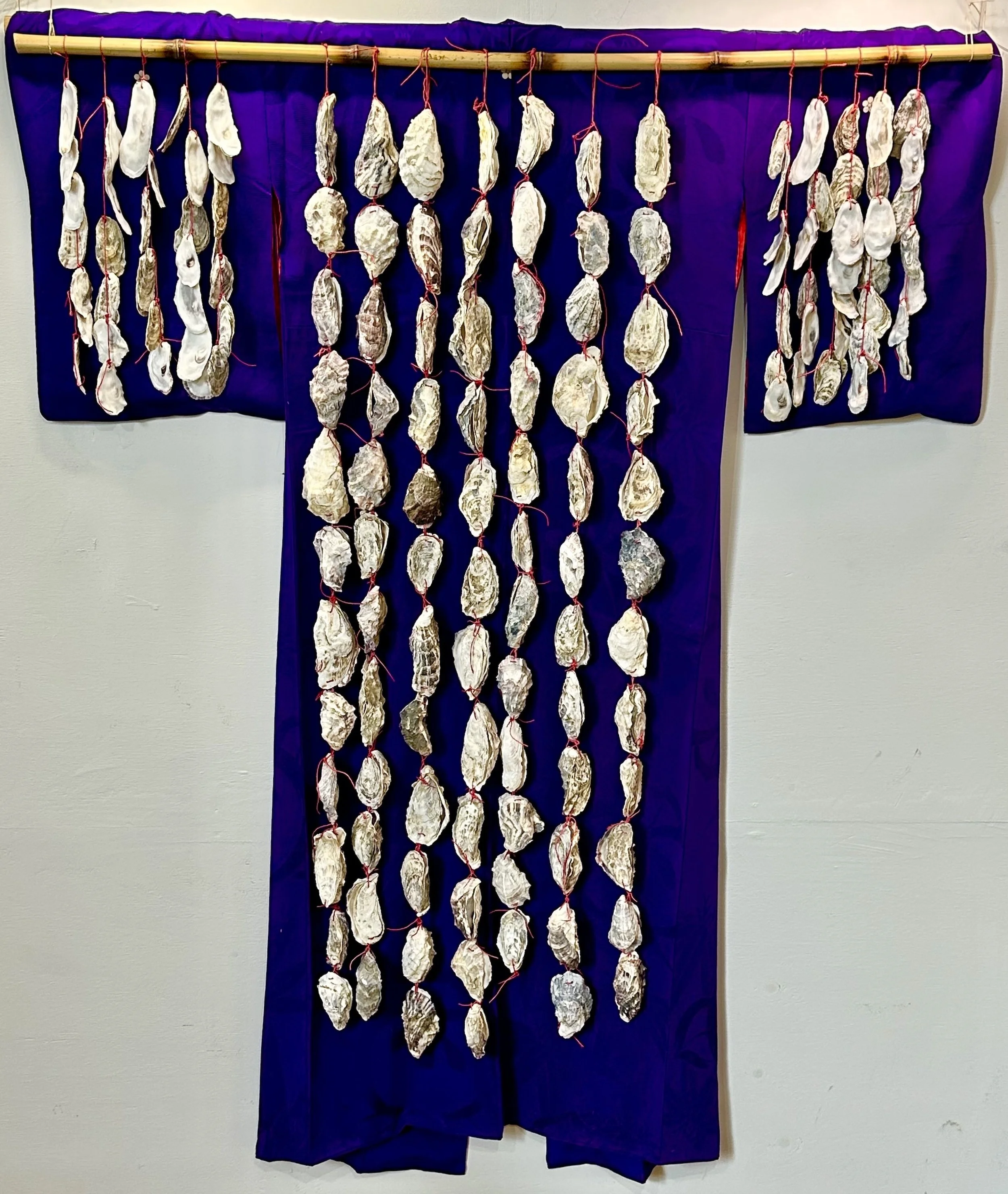
Na Omi’s oyster kimono.
A particularly meaningful moment in Shintani’s personal journey came when she decided to return to Tule Lake with her father.
The camps have become places of pilgrimage for many Japanese American families. People return to remember relatives who died, to honor those who were incarcerated, and to connect with others whose families share the experience.
Shintani wanted her father to participate in the Tule Lake pilgrimage, a multi-day gathering held around the Fourth of July. She invited the rest of the family, including her brothers and their children, but they were unable to join. In the end, it was just Na Omi and her father.
She was glad they went. “My dad and I went, and I'm so glad we went because it really was a bonding moment for us.”
The pilgrimage gave them time together in a place that had shaped his childhood and the course of their family’s history. For Shintani, it was an opportunity to understand more deeply what her father had lived through and to share the experience with him while she still could.
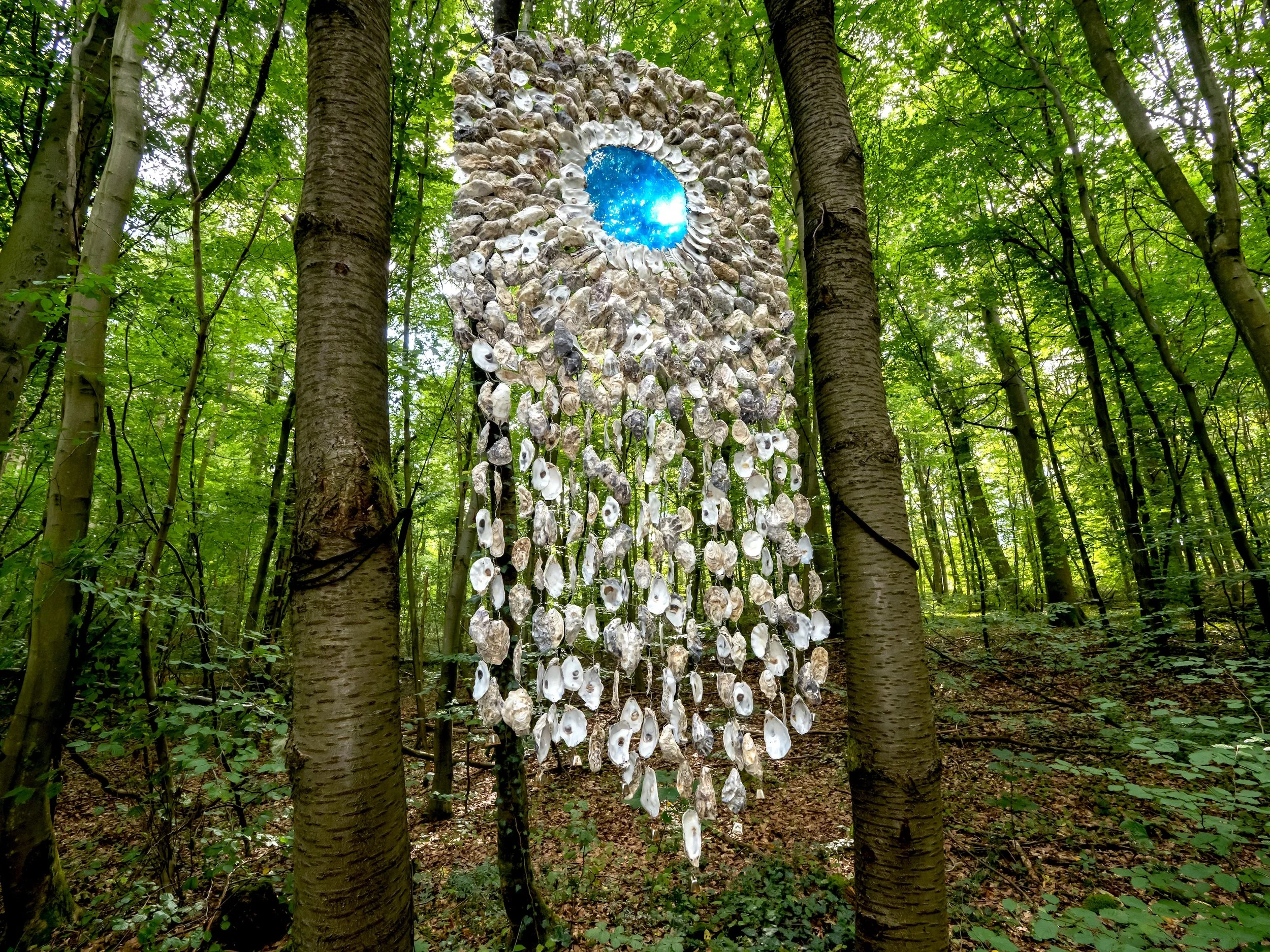
Na Omi’s oyster mandela installation in Germany’s Bavarian forest. Showcasing the impact oysters have on water filtration in the ocean.
Na Omi Shintani's life demonstrates the power of art to preserve memory and inspire action.
Drawing from her family's experiences, she transformed inherited history into a public mission. Through installations, exhibitions, community engagement, and advocacy, she has ensured that the stories of incarcerated children and displaced families are not forgotten.
Her work reminds audiences that history is not abstract. It lives in families, communities, and generations. It shapes identities and informs choices. Most importantly, it offers lessons that remain relevant today.
She understands that silence can allow injustice to continue. Her family’s experience has given her a particular sense of responsibility to speak for people who may not have the power or opportunity to speak for themselves.
As she explained, “No one spoke up for us when we were going through this, so now we're going to speak up for all the people that are going through it now.”
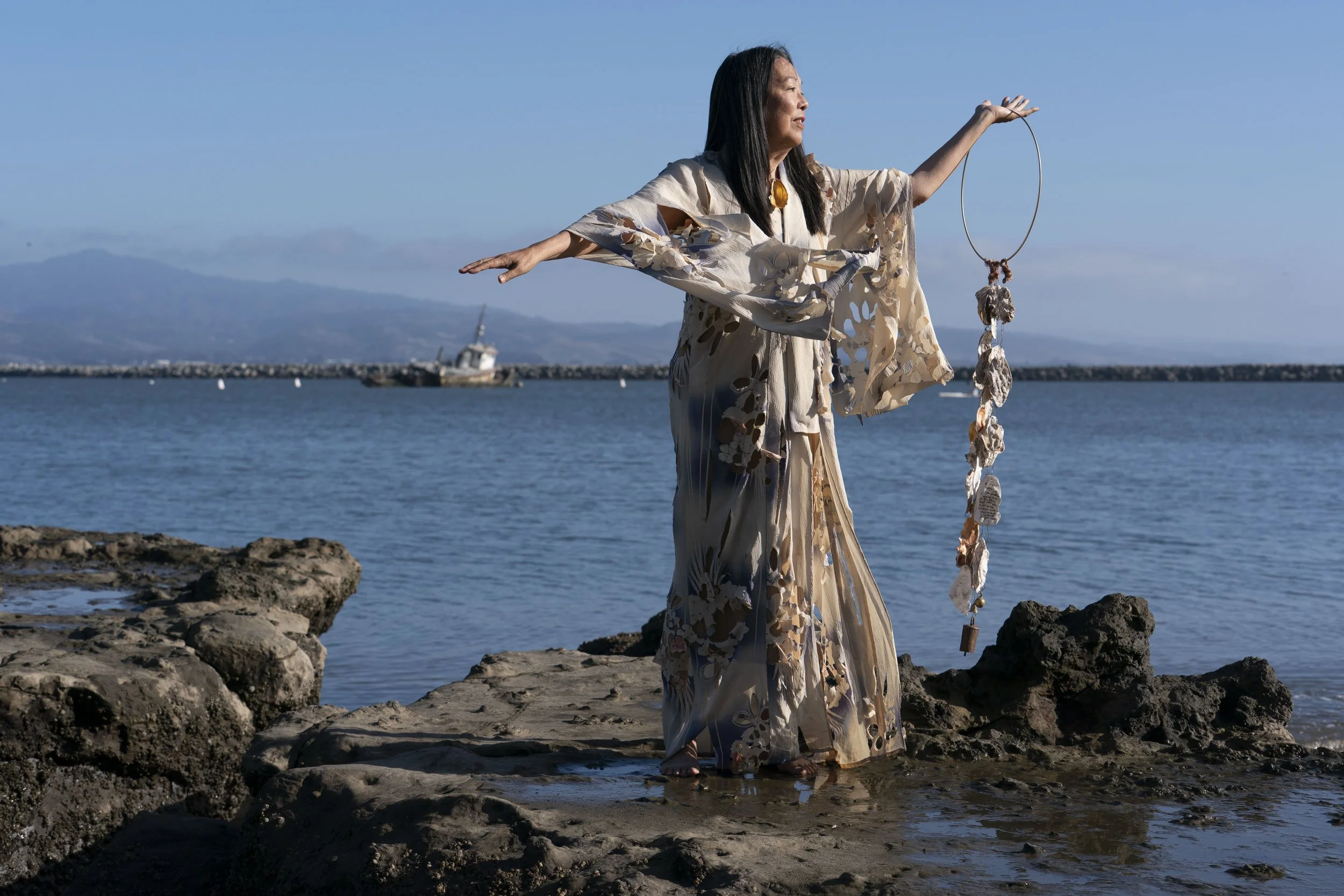
Na Omi, photographer for her Cantadora label by Susan Friedman, near her home in Half Moon Bay, California.
The recognition she received for her advocacy reflects more than artistic achievement. It honors her dedication to educating the public, defending human dignity, and giving voice to children whose experiences might otherwise remain invisible.
In an era when historical memory can easily fade, Na Omi Shintani has chosen to remember.
And through her art, she has helped others remember as well.
We toast to Na Omi’s continued work with a glass of mineral-driven, bright, and aromatic Viognier and paired with a delicious Puget Sound oyster, as a nod to her family, their endurance, and her board contributions to our society.