
ThE Advocate

Cantadora “The Advocate”
2023 Tempranillo
Shake Ridge Ranch, Amador County AVA
Dedicated to the story and contributions of Shilpi Agarwal.
When Shilpi Agarwal reflects on her family's story, she often begins long before her own birth. She begins in northern India, in the state of Uttar Pradesh, where both of her parents came from modest circumstances and where education became the vehicle that transformed the trajectory of an entire family.
Shilpi’s wine is the 2023 Cantadora “The Advocate” Tempranillo. Her wine is appropriately the wine I’ve studied the most. I began producing it in 2016 with the founding of my commercial wine business and have made it ever since. I have trialed many different fermentation styles to arrive at the crescendo that is the 2023.
Organically farmed by Ann Kraemer
110 cases produced

This vintage is truly a gift. Of the years I’ve produced wine, I believe this one has the most potential for longevity. That persistence mirrors Shilpi’s life and the lives of her family. Shilpi’s successful advocacy as a lawyer for the ACLU and current legal director for Northern California is a testament to her endurance and determination. The structure, elegance and length on this wine parallels her work and roots.
"My dad grew up originally in a village with no electricity, no plumbing," she recalled. "I've gone back and seen it."
Her father was one of ten surviving children in a large rural family on the outskirts of Lucknow. Resources were scarce, but ambition was not. Through determination and academic excellence, he earned admission to the prestigious Indian Institute of Technology, creating opportunities that had seemed unimaginable during his childhood. Her mother was equally determined. In an era when many young women were expected to marry early through arranged marriages, she insisted on continuing her education and pursuing advanced academic work.
"She wanted to get her PhD," Shilpi remembered. "She insisted that she be allowed to continue her education and not get married."
Their courage to challenge expectations would shape the values that defined their daughter's life.
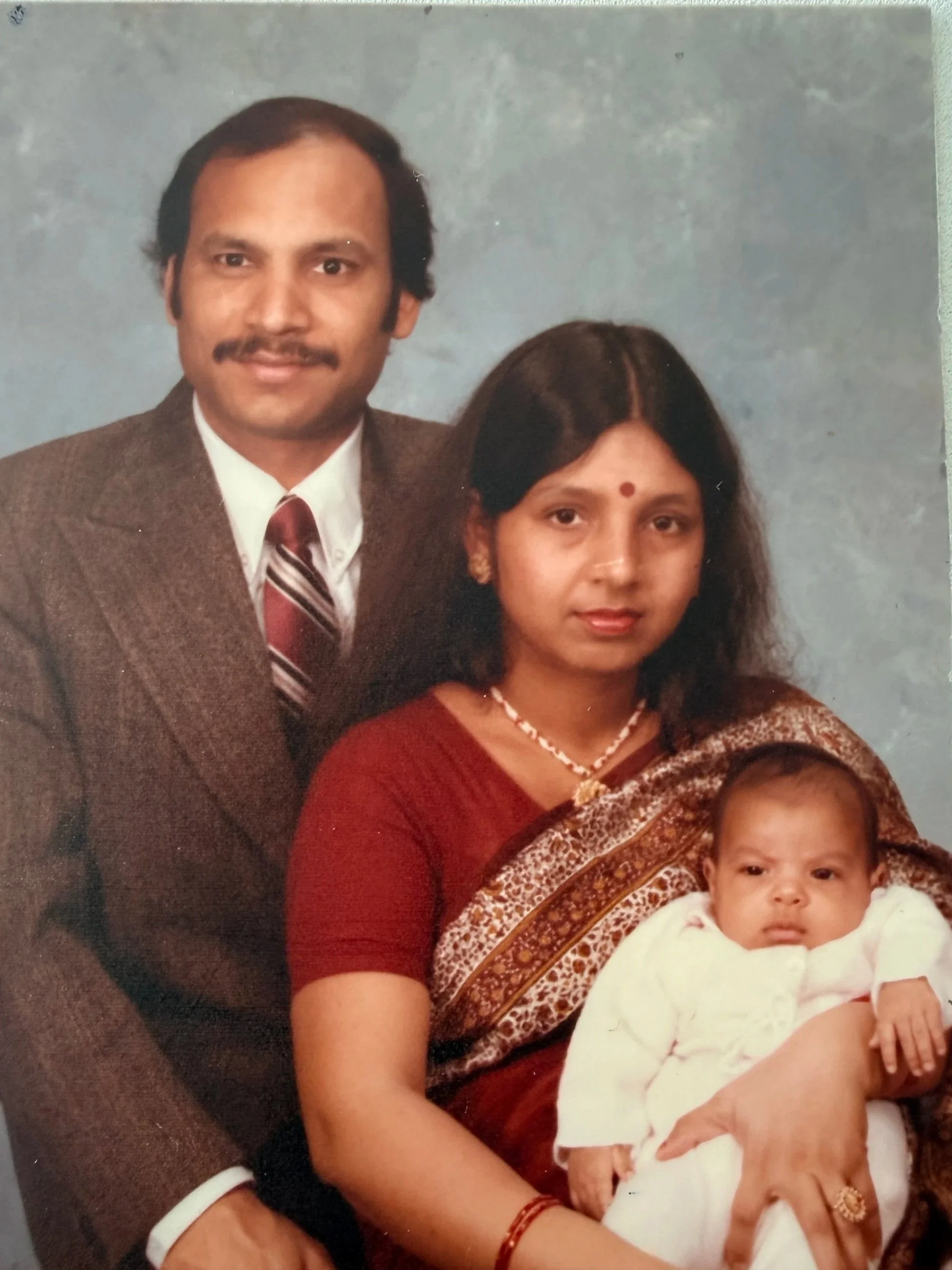
Shilpi’s sister and her parents before their move to the United States.
In 1979, they immigrated to the United States. Shilpi's older sister was a year old at the time. Her father first worked in Germany and later accepted a postdoctoral position in Missouri. Her mother boarded an airplane for the first time in her life, carrying a baby and leaving behind everyone she knew. They arrived in St. Louis with little money, few connections, and enormous hopes for the future. Her mother sold Avon cosmetics door to door while learning English; her father worked his way from academia into industry.
Looking back, Shilpi recognizes that her parents' journey was unusual even among highly educated immigrants.
"I think my parents came from a much more modest background than was typical in that early wave of immigration from India," she reflected.

Shilpi, Age 1
The family placed tremendous value on learning. Academic achievement was not simply encouraged; it was woven into daily life. Shilpi and her older sister grew up understanding that education represented possibility, independence, and responsibility.
Just as important as ambition was community. Because her parents had no relatives nearby, they built support networks wherever they lived. In St. Louis, a neighbor named Gloria became so important to the family that Shilpi grew up calling her Grandma.
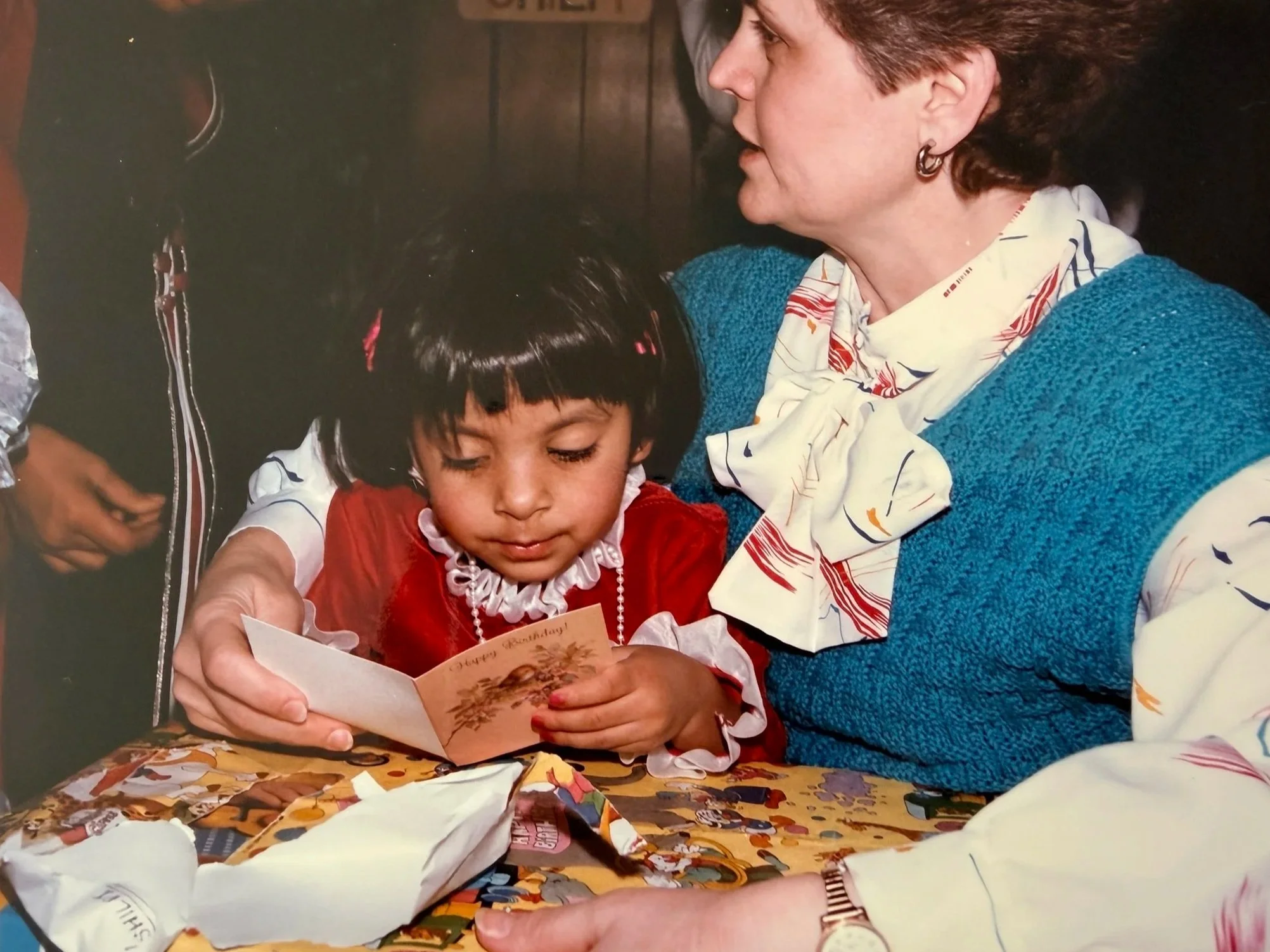
Shilpi & Gloria (“Grandma”)
Later, in New York and eventually Houston, neighbors, immigrant friends, and community members helped one another navigate the challenges of raising children, finding work, and maintaining cultural traditions far from home. These experiences taught Shilpi that success is rarely achieved alone.
When Shilpi was five, the family settled in Houston, Texas, where she spent most of her childhood. Houston's large Indian community provided a strong cultural foundation, but growing up as a first-generation American often meant living between two worlds. At school she sought to fit into mainstream American life; at home she remained deeply connected to Indian traditions, language, food, and family expectations. Like many children of immigrants, she wrestled with balancing belonging and individuality.
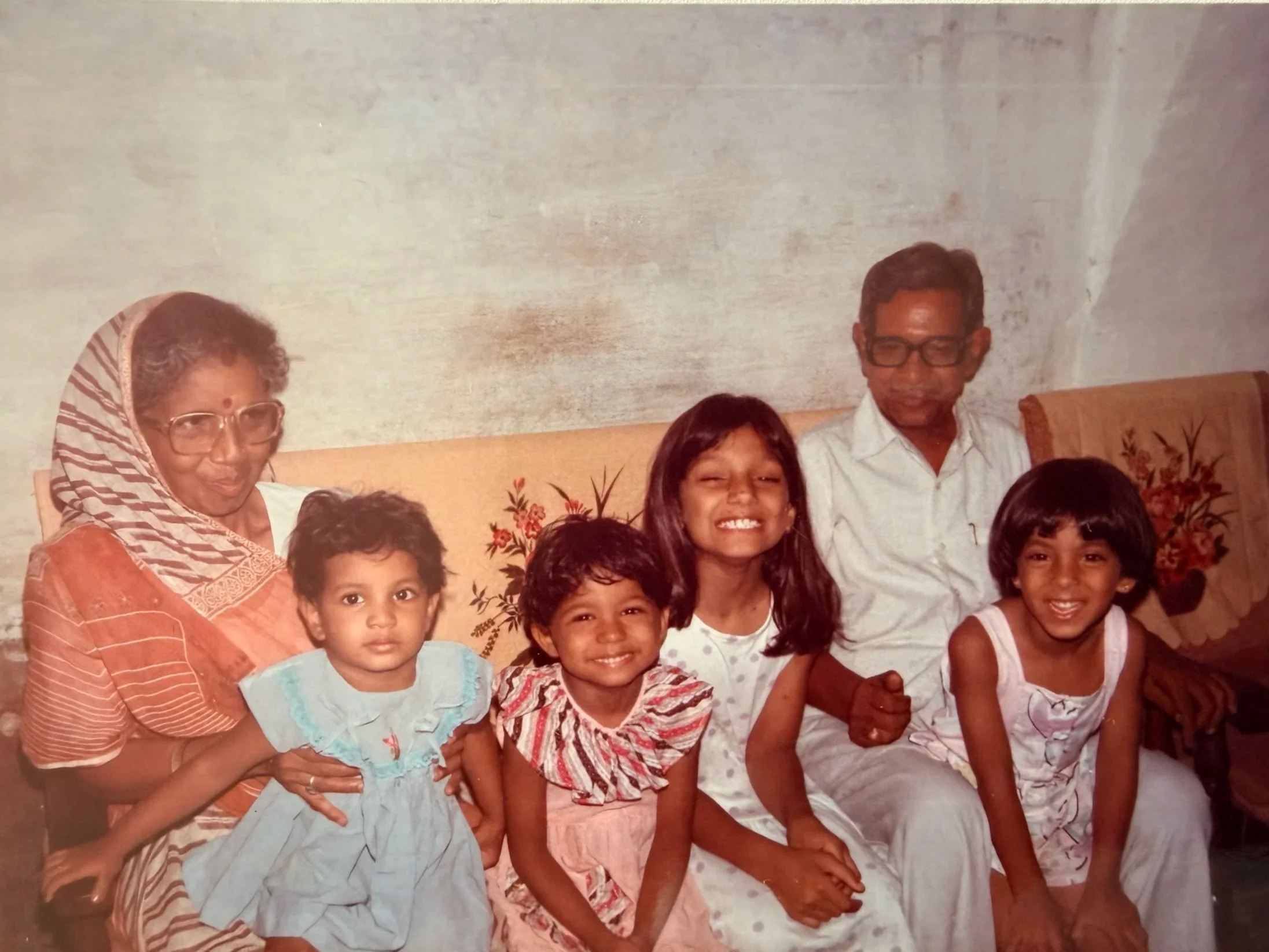
Shilpi with her sister, grandparents and cousins.
After high school, Shilpi enrolled at Stanford University. Leaving Texas marked a turning point. For the first time, she was fully independent and free from many of the expectations that had shaped her upbringing. She formed lifelong friendships, experimented with newfound freedom, and began questioning assumptions she had inherited about success and identity.
"Stanford was extremely formative to me for a lot of different reasons," she said.
College broadened her understanding of the world. She encountered people from different backgrounds, ideas that challenged her assumptions, and professors who encouraged deeper thinking about public policy, inequality, and civic responsibility. It was a period of intellectual growth, exploration, and self-discovery.
Years later, she would describe college as the place where her perspective widened dramatically. It exposed her to the social and economic realities faced by communities across the country and helped her recognize how public institutions shape individual lives.
At Stanford, she studied both Political Science and Economics, disciplines that appealed to her desire to understand both human behavior and structural forces. The combination would later become invaluable in her legal career.

Shilpi with her parents, sister and brother-in-law
After graduation, Shilpi chose not to move immediately into law school. Instead, she spent a year in Washington, D.C., living with friends and working in the nonprofit sector.
"I think the next four-year period, living in D.C. and then attending law school, is a real growing-up period for me," she reflected.
The year gave her independence and perspective. She worked, paid bills, navigated life on her own, and began clarifying what she wanted her future to look like. She also prepared for the LSAT, a test that would help open doors to some of the nation's most prestigious law schools.
When admissions decisions arrived, she faced a choice among elite institutions. Ultimately, she selected Columbia Law School.
At Columbia, Shilpi discovered that she loved legal argument, advocacy, and the strategic challenge of litigation. She immersed herself in civil rights law and constitutional issues, developing skills that would later define her career.
One of the most influential was Professor Olati Johnson, a civil rights scholar who encouraged Shilpi to think seriously about litigation.
According to Shilpi, Johnson told her, "You're a litigator. You have that in you. You like the sparring. You have the fire in you."
The assessment proved prophetic.
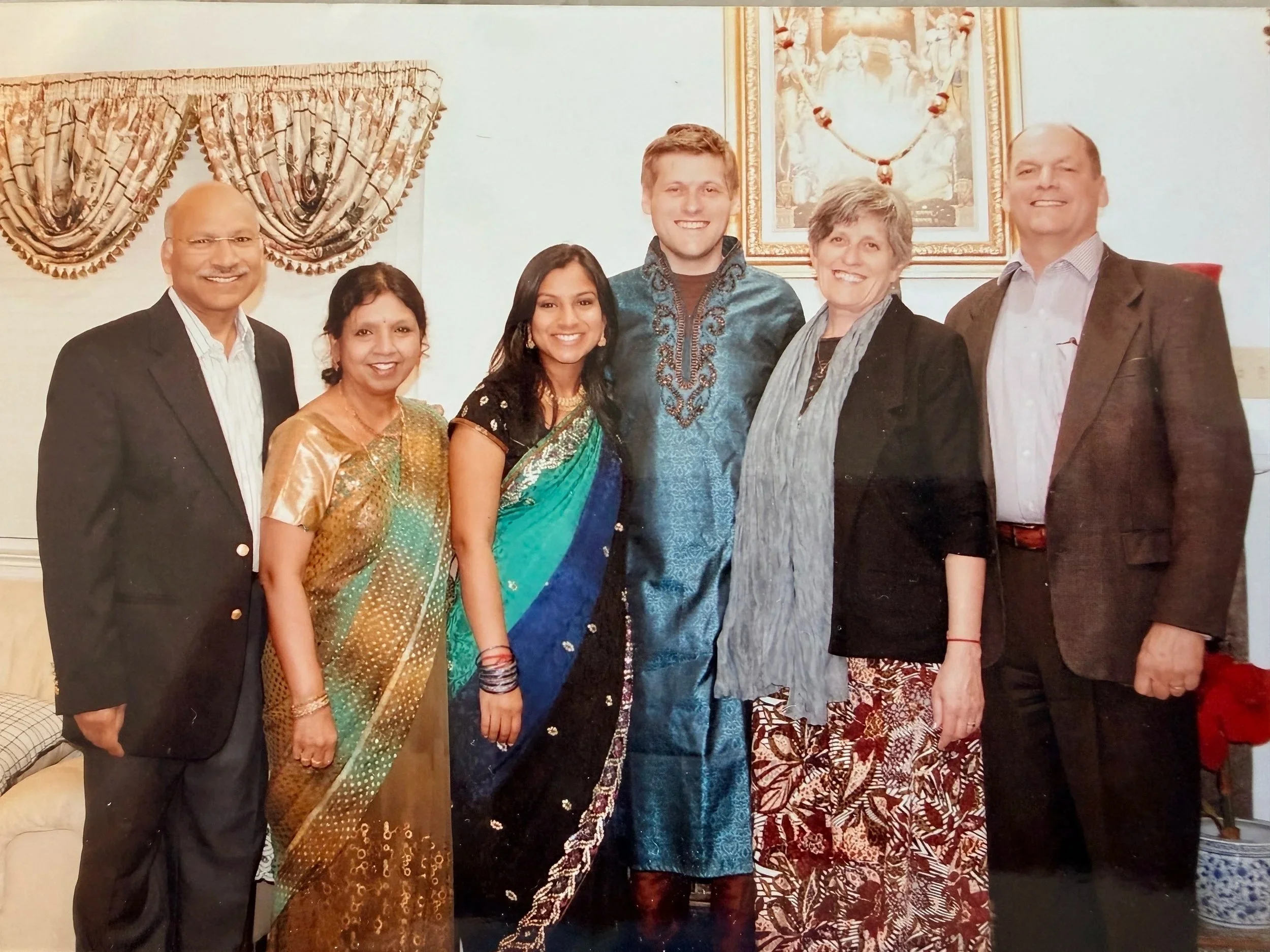
Shilpi with her husband, parents, and in-laws
In her last year at Columbia, Shilpi received a fellowship that allowed her to work with the Legal Director of the national ACLU office in New York. The experience exposed her to impact litigation and demonstrated how law could be used to create broad social change.
During her fellowship, Shilpi became convinced that the ACLU represented the ideal intersection of her values and talents.
It embodied everything that drew her to law: defending constitutional rights, standing with marginalized communities, challenging government overreach, and engaging in intellectually rigorous litigation.
After graduation, Shilpi clerked for federal judges Keith P. Ellison of the Southern District of Texas and Betty B. Fletcher of the United States Court of Appeals for the Ninth Circuit. These prestigious clerkships deepened her understanding of the judiciary and sharpened her legal writing and analytical abilities.
She then entered private practice at the highly respected litigation firm Keker & Van Nest, where she handled complex civil and criminal matters. Yet even while working in one of the nation's most demanding legal environments, she maintained a strong commitment to public service.
Eventually, she became an Assistant Federal Public Defender in San Francisco.
There, she represented individuals accused of federal crimes, serving as lead counsel in trials and arguing before the Ninth Circuit Court of Appeals. The work placed her in direct contact with people navigating some of the most difficult moments of their lives. It reinforced her belief that constitutional protections matter most when they protect those with the least power.
Yet throughout these years, one goal remained in the back of her mind.
The ACLU.

Shilpi with her husband and two daughters.
Eventually, soon after President Trump was first elected, that aspiration became reality.
Shilpi joined the ACLU of Northern California as a staff attorney and quickly emerged as one of the organization's leading litigators. Over time, she became Senior Staff Attorney and ultimately Legal Director, a position in which she helps shape the organization's litigation strategy and oversees affirmative legal actions throughout Northern California.
Her work has touched a remarkable range of issues: voting rights, free speech, privacy, criminal justice reform, police accountability, and the abolition of the death penalty.
These cases reveal a consistent theme throughout her career: a commitment to ensuring that constitutional rights are meaningful not only for the powerful, but for everyone.
As Legal Director, she has become one of Northern California's leading voices on civil liberties and constitutional law. She regularly analyzes major Supreme Court decisions, advocates for voting rights, and develops strategies to respond to evolving threats to civil liberties.
Colleagues and observers increasingly recognize her as a thoughtful strategist who combines intellectual rigor with a deep commitment to community. In 2025, she was selected as keynote speaker for the Asian American Criminal Trial Lawyers Association annual gala, reflecting the respect she has earned within California's legal community.
Yet perhaps the most remarkable aspect of Shilpi Agarwal's story is not the titles she has earned or the cases she has won. It is the continuity between generations.

Shilpi at Temescal Regional State Park in Oakland, a place of refuge for her.
Her father's journey began in a village without electricity. Her mother's journey began with the courage to insist on an education when social expectations pushed in another direction. Their determination carried them across continents and into a new life in America.
Their daughter inherited that same determination, but she directed it toward a different challenge: ensuring that the promises embedded in democratic institutions become realities for ordinary people.
Today, whether she is defending voting rights, protecting free speech, challenging unlawful government action, or mentoring young attorneys, Shilpi Agarwal continues to pursue the ideals that first inspired her years ago.
She once described the ACLU as the perfect combination of "fighting for the underdog," addressing inequality, and engaging in the complex legal work she loves.
That description could just as easily serve as a summary of her own life.
In many ways, Shilpi’s life's work represents an extension of her family's story. Education opened doors for one generation. The law became the tool through which the next generation would help open doors for others.
From the daughter of immigrants to one of California's leading civil-rights lawyers, Shilpi Agarwal's journey demonstrates how perseverance, education, and a commitment to justice can transform not only a single life, but the lives of countless others.
We toast her ongoing work for our community and civil rights across the country with her long barrel-aged Tempranillo.